
THE CHARCOAL TRAP: CLIMATE INJUSTICE AND DEFORESTATION IN ULEPPI SUB-COUNTY, MADI-OKOLLO DISTRICT
By Victor Andama
Along the dusty stretches of the Arua–Nebbi Highway that wind through Uleppi Sub-county, towering stacks of white polypropylene sacks stand by the roadside under the scorching West Nile sun. Filled with lumps of charcoal, the bags await transportation to urban centres such as Arua, Gulu and Kampala.
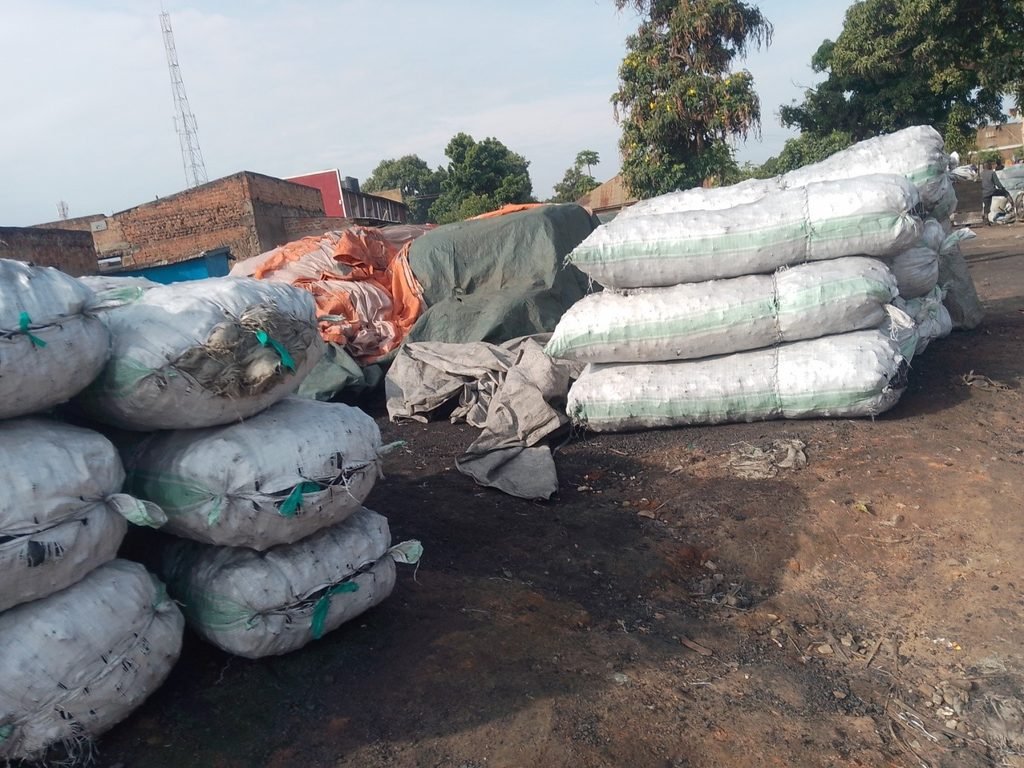
For 34-year-old single mother Beatrice Candiru, the sacks represent both a source of livelihood and a growing environmental threat.
“If I do not burn charcoal, my children do not eat, and their school fees go unpaid,” she says, her hands stained with charcoal dust. “But every year, I have to walk deeper into the bush to find trees big enough to burn. The land is getting hotter, the rains are becoming unpredictable, and we are cutting down the very trees that provide us with shade.”
Candiru’s experience reflects a growing dilemma facing many households in Uleppi: the struggle to survive amid worsening environmental challenges.
Communities that have contributed little to global greenhouse gas emissions are increasingly bearing the consequences of climate change. Unpredictable rainfall, prolonged dry spells and declining agricultural productivity are placing additional pressure on rural livelihoods. For households with few alternative sources of income, charcoal production has become an emergency survival strategy.
However, as more families turn to charcoal burning, the activity is accelerating the destruction of the very natural resources on which their livelihoods depend.
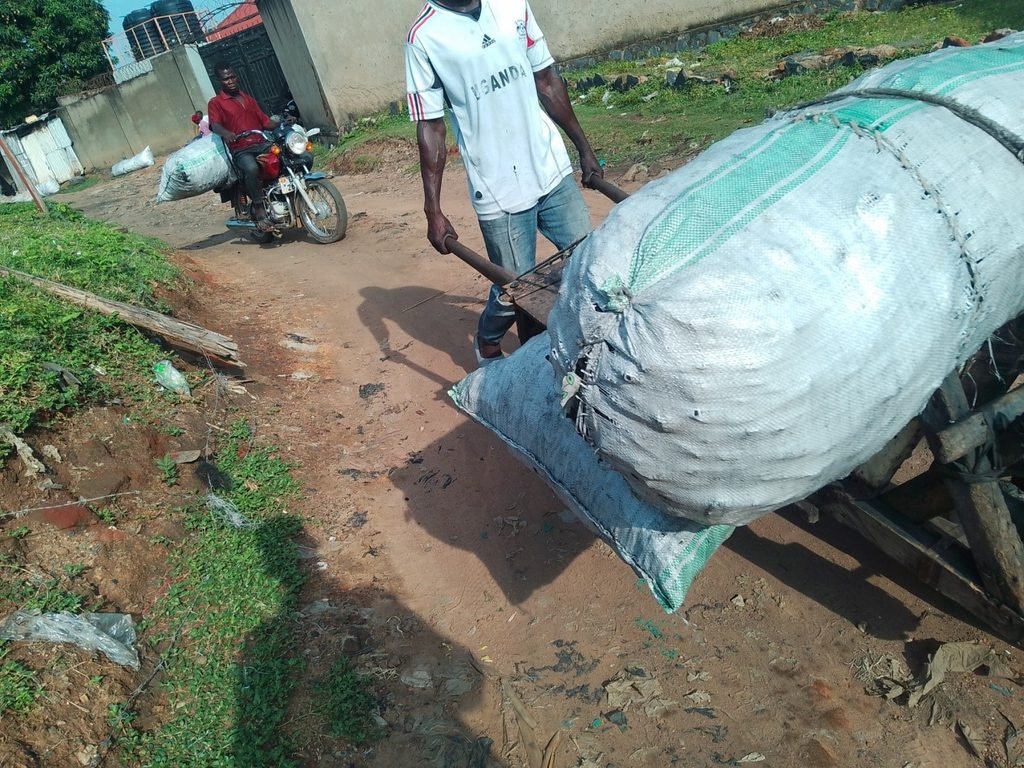
Agriculture’s Decline and the Turn to Charcoal
For generations, Uleppi Sub-county has relied heavily on agriculture, with cassava, simsim and groundnuts among the crops cultivated by local farmers.
Today, however, changing weather patterns are creating growing uncertainty for farming households. Farmers increasingly struggle with unpredictable rainfall, prolonged dry spells and occasional heavy downpours that can wash away fertile topsoil.
When harvests fail, many households have limited options. Without reliable agricultural insurance, adequate financial support or alternative livelihood opportunities, some turn to charcoal production to meet immediate household needs.
Limited access to affordable alternative energy sources further sustains demand for charcoal. In communities where electricity and liquefied petroleum gas (LPG) remain inaccessible or unaffordable to many households, charcoal continues to serve as both a source of income and an essential cooking fuel.
A seasonal economic survey conducted by local civil society actors reportedly found that nearly 70 per cent of smallholder households in Uleppi depend on charcoal production as their primary or secondary source of emergency income when harvests fail.
For Mundu Moses Okondo, a climate ambassador from Uleppi Sub-county, the situation requires urgent intervention. He estimates that up to 90 per cent of households in the area depend on charcoal burning for their livelihoods.
Yet his efforts to encourage environmental conservation have come at a personal cost.
Okondo says some community members ridicule and isolate him because he does not participate in the charcoal business, which has become a lucrative source of income for some residents.
“I am always called a poor man in my village because I do not have money like the charcoal dealers. Because I do not engage in the business, some people exclude me from community activities. Yet this is money they have obtained through dubious means,” he says.
Despite the criticism, Okondo continues to champion tree planting and environmental conservation, using public gatherings, funerals, social events and school engagements to encourage communities to protect trees.
His experience illustrates the social and economic pressures facing environmental conservation advocates in communities where immediate financial returns often take precedence over long-term environmental protection.
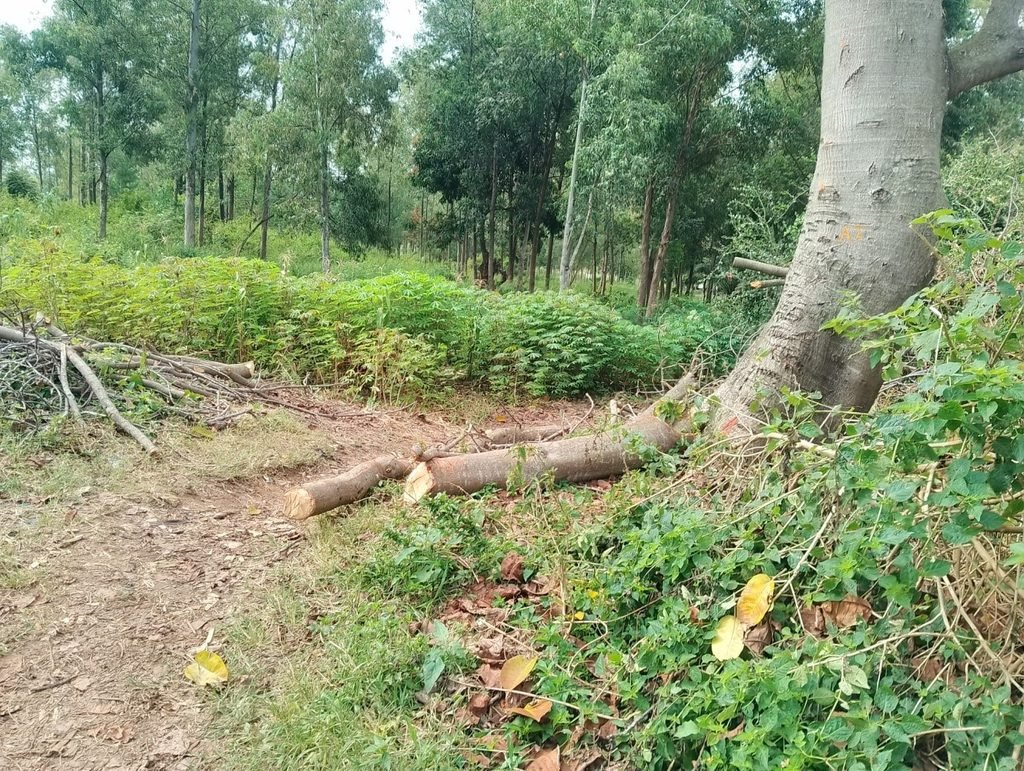
The Assault on Indigenous Trees
The growing charcoal trade is placing increasing pressure on indigenous tree species in Uleppi, particularly slow-growing hardwoods such as the Shea tree and Afzelia Africana.
The destruction of these trees threatens more than the area’s forest cover. It also undermines traditional livelihoods and the community’s ability to adapt to climate change.
Loss of traditional sources of income: Shea trees provide fruits and oil that can support household consumption and generate income, particularly for women. Cutting them down for charcoal offers a one-off financial return but destroys a resource that could sustain households for generations.
Declining environmental resilience: Trees provide shade, protect soil and help regulate local environmental conditions. As tree cover disappears, exposed land becomes more vulnerable to intense heat and moisture loss.
Increasing soil degradation: Tree roots help stabilize the soil and reduce erosion. Their removal exposes fertile topsoil to being washed away during heavy rainfall, further undermining agricultural productivity.
This creates a damaging cycle: declining agricultural productivity pushes more households into charcoal production, while continued tree destruction makes farming increasingly difficult.
An officer from the Madi-Okollo District Environment Department warns that the continued loss of indigenous trees threatens the area’s environmental stability.
“We are witnessing the destruction of our natural heritage. Uleppi is losing its ecological protection. Every tree turned into charcoal means less protection for the soil, poorer agricultural conditions and hotter surroundings for future generations,” the officer says.
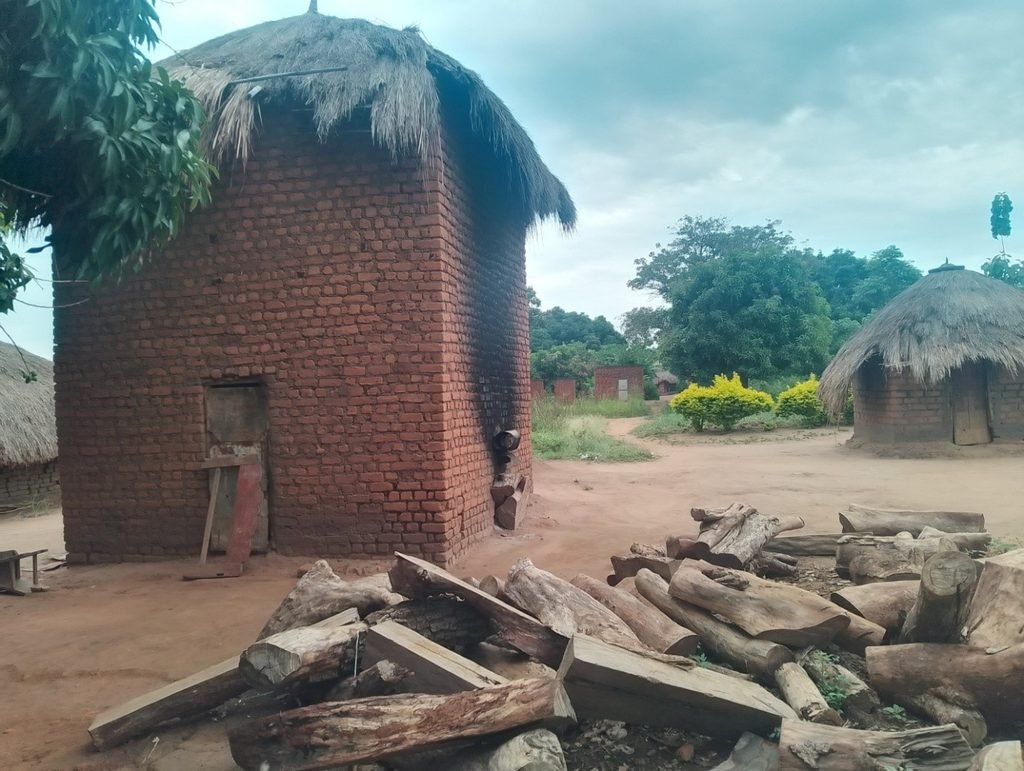
Women and Children Bear the Hidden Cost
Although charcoal production provides immediate income for some households, its environmental and social consequences are not shared equally.
Women and children bear much of the hidden cost of the trade, particularly as nearby woodlands become increasingly depleted.
As trees disappear around settlements, women and girls must travel longer distances in search of firewood for household use. These journeys consume time that could otherwise be spent on farming, education or other productive activities. They may also expose women and girls to physical injury and safety risks.
Women and children who work around charcoal kilns are also exposed to smoke and harmful particulate matter, which can pose serious respiratory health risks.
For young people, the growing dependence on charcoal presents another concern. Economic hardship and the need to support household incomes can interfere with children’s education, particularly where families struggle to meet school-related expenses.
Some young people may be drawn into activities such as cutting trees, monitoring kilns and packing charcoal, potentially limiting their opportunities to pursue education and acquire skills for alternative livelihoods.
Without viable economic alternatives, the cycle of poverty and environmental degradation risks being passed on to another generation.
Weak Enforcement and the Search for Solutions
Despite the environmental concerns, controlling charcoal production and illegal tree cutting remains a challenge for Madi-Okollo District.
The district has environmental regulations restricting the commercial cutting and burning of protected tree species, including Shea trees. However, enforcement is constrained by limited resources, inadequate personnel and the difficulty of monitoring remote communities.
The district’s environmental sector reportedly operates with a limited budget, affecting its ability to conduct regular inspections and patrols. Without adequate transport, fuel and staffing, monitoring illegal tree cutting and charcoal transportation becomes difficult.
Concerns have also been raised about the role of middlemen who purchase charcoal from local producers and transport it to larger urban markets. Allegations of informal payments and the circumvention of checkpoints further complicate enforcement.
However, the challenge goes beyond enforcement. For households such as Candiru’s, simply prohibiting charcoal production without addressing the economic pressures driving it could deepen existing poverty.
Climate justice advocates argue that communities need practical and sustainable livelihood alternatives alongside stronger environmental protection measures.
Civil society organizations, including RICE West Nile, have called for targeted investments in climate adaptation and alternative income-generating activities.
Some of the proposed interventions include:
- Solar-powered irrigation systems: Investing in solar-powered irrigation and water storage facilities would enable farmers to grow high-value crops throughout the year, reducing their dependence on unpredictable rainfall.
- Sustainable beekeeping: Establishing modern apiaries in indigenous forest areas could provide households with income from honey production while creating an economic incentive to conserve trees.
- Sustainable biomass management: Training communities in sustainable harvesting practices and promoting tree planting would help reduce pressure on existing natural forests.
- Fuel-efficient cooking technologies: Promoting improved cook stoves could reduce household dependence on charcoal and firewood, helping to minimize demand for biomass energy.
These interventions would require coordinated investment from government, development partners and civil society organizations to ensure that environmental protection does not come at the expense of vulnerable households’ livelihoods.
Executive Order No. 3 of 2023: What Does It Mean for Uleppi?
The government’s position on commercial charcoal production is outlined in Executive Order No. 3 of 2023, issued by President Yoweri Museveni on May 19, 2023.
The order introduced restrictions on commercial charcoal burning, trade and extensive tree cutting in several parts of Uganda, including Northern Uganda, West Nile, Karamoja, Lango, Acholi and the Teso sub-region.
The directive was intended to address widespread environmental degradation and the destruction of forest resources.
However, its implementation raises important questions about enforcement, accountability and the availability of alternative livelihoods for communities that depend on charcoal production.
How effectively is the order being enforced in Uleppi? What measures has Madi-Okollo District put in place to protect indigenous tree species? And what support is available for households that depend on charcoal production to survive?
These questions remain central to understanding the gap between environmental policy and the realities facing communities on the ground.
Until these concerns are addressed through effective enforcement, adequate funding and sustainable livelihood interventions, the charcoal trade is likely to remain an attractive option for households struggling with poverty and climate-related agricultural losses.
For Beatrice Candiru and many other families in Uleppi, the charcoal kiln is more than a source of income. It is a reflection of the difficult choices people make when survival today comes at the expense of tomorrow.
The challenge, therefore, is not simply to stop communities from cutting down trees, but to create economic conditions that make protecting those trees a more sustainable choice than destroying them.
END.