
LACK OF COLLATERAL LOCKS WOMEN IN ADJUMANI OUT OF GROW PROJECT BENEFITS
By Tasia Doreen
For many women entrepreneurs in Adjumani District, the opportunity to expand their businesses through government-supported financing remains out of reach, not because they lack viable business ideas, but because they cannot provide the collateral required by financial institutions.
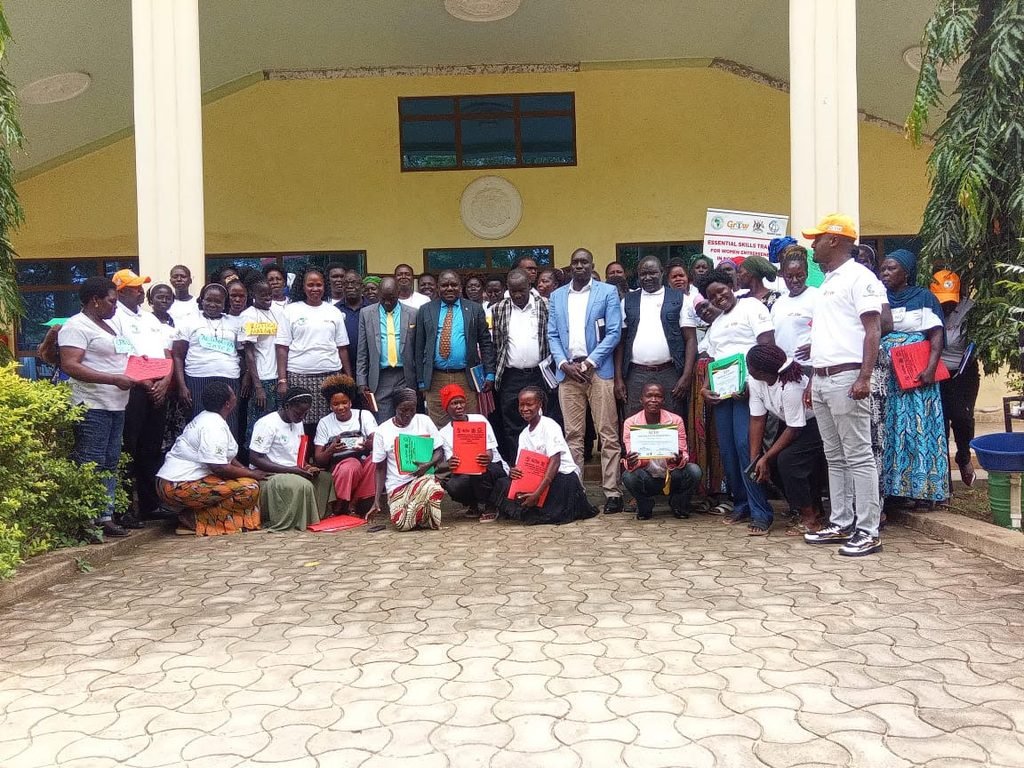
The challenge emerged during the conclusion of a four-day business training conducted by Makerere University Business School (MUBS) and FEM consultants and Research Centre on November 12th, 2026, under the Generating Growth Opportunities and Productivity for Women Enterprises (GROW) Project.
During the engagement, stakeholders highlighted the difficulties women face in meeting loan requirements, particularly the demand for land titles and other assets that many do not own or control.
Implemented by the Ministry of Gender, Labour and Social Development, the GROW Project seeks to support women-owned and women-led enterprises through improved access to finance and business development services, enabling them to expand businesses, create employment and increase household incomes.
However, for some women in Adjumani, limited ownership of property is becoming a major obstacle to accessing the financial support intended to grow their enterprises.
Speaking during the training, Swaib Olema, the Adjumani GROW Project focal person, revealed that UGX 836 million had been disbursed to 98 women entrepreneurs in the district as of July 2026.
He noted, however, that several other applicants had not accessed the loans because they could not meet the collateral requirements set by participating financial institutions.
“One of the challenges since the project started has been the lack of collateral. Most women do not own property in their names. If they are not on good terms with their husbands, brothers or fathers, they may find it difficult to access property that could be used as security. Yet financial institutions require land titles and movable assets,” Olema said.
The situation particularly affects women who have limited ownership or control over family property, leaving them unable to secure loans even when they have business plans and the ambition to expand their enterprises.
Adjumani District Chairperson John Anyanzo Ambayo called on financial institutions and project implementers to consider alternative collateral arrangements that would accommodate women without formal property ownership.
He said concerns about the loan selection criteria had previously been raised during engagements in Koboko District, where women entrepreneurs were also experiencing difficulties accessing the financing.
“We are happy that the women have received training. However, when we were in Koboko, we raised concerns about the challenges women face in accessing the money and called for the incentive and selection criteria to be reviewed because the current requirements do not favor some of them,” Anyanzo said.
The collateral challenge raises questions about whether the project’s financing arrangements are sufficiently responsive to the circumstances of rural women, particularly those from low-income households who may have viable businesses but lack formally recognized assets.
While access to credit can provide an opportunity for business growth, the requirements attached to borrowing may exclude some of the women the project intends to support.
Meanwhile, the Resident District Commissioner, Swaib Toko, urged the beneficiaries to apply the knowledge acquired during the training and exercise financial discipline in managing their businesses.
“I appeal to the women to take this training seriously and apply the lessons in their businesses. For any business to grow, financial discipline is essential. Separate your personal finances from your business finances,” Toko said.
Beyond access to financing, stakeholders emphasized the importance of strengthening financial literacy, business management skills and enterprise formalization to enable women to manage their businesses effectively and meet relevant financial requirements.
The four-day training brought together 106 women entrepreneurs, comprising 75 from host communities and 31 refugees.
As the GROW Project continues to support women-owned and women-led enterprises, addressing the collateral barrier will be critical to ensuring that women who lack formal property ownership are not left behind.
For many aspiring women entrepreneurs in Adjumani, access to business training is an important first step. But without financing arrangements that recognize their economic realities, the opportunity to turn their business ambitions into sustainable enterprises may remain limited.
END