
ADJUMANI REGISTERS 3,300 HIV CASES.
By Anzoo Evaline.
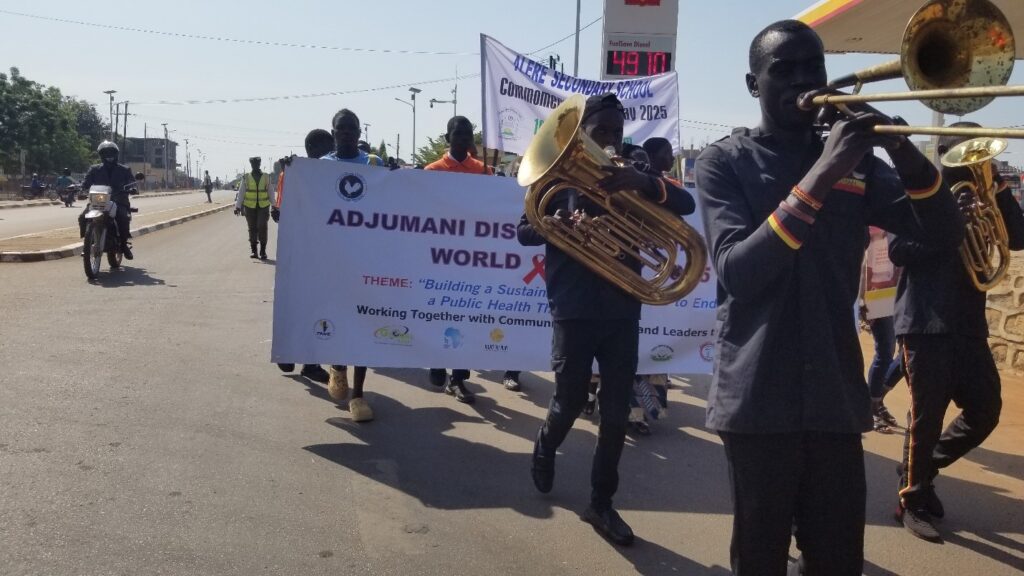
Adjumani District has today 1st December 2025 marked the World AIDs Day 2025, with 3,300 people currently living with HIV/AIDS across both the refugee and host communities.
This is worrying as the district’s HIV prevalence rate now stands at 2.4%, slightly higher than the 2.3% average for the West Nile sub-region.
The day was celebrated under the theme: “Building a sustainable HIV response to end Aids as a public health threat.”
According to District Health Officer Adjumani, Dr. Drametu Dominic, HIV remains one of the diseases targeted for eradication by 2030 alongside teenage pregnancy and violence against women.
He noted that between July 2024 and June 2025, the district registered 110 new HIV infections, adding that the actual number may be higher due to people who have not tested or those unaware of their status.
“Nationally, the HIV prevalence of 2022 UDH stands at 5.1%. The one of West Nile is at 2.3%. The one of Adjumani is 2.4%. You can see our prevalence is higher than the average of West Nile,” Dr. Drametu stated, urging communities to take testing, treatment, and prevention seriously.
Health officials and stakeholders attributed the rising numbers to several factors including: drug abuse, gender-based violence, poverty, alcoholism, poor parental guidance, insecurity, and increased inter marriage between different tribes especially in areas like Zoka and Apaa. Leaders also noted that many young people no longer fear HIV because they rarely see people dying due to HIV-related illnesses.
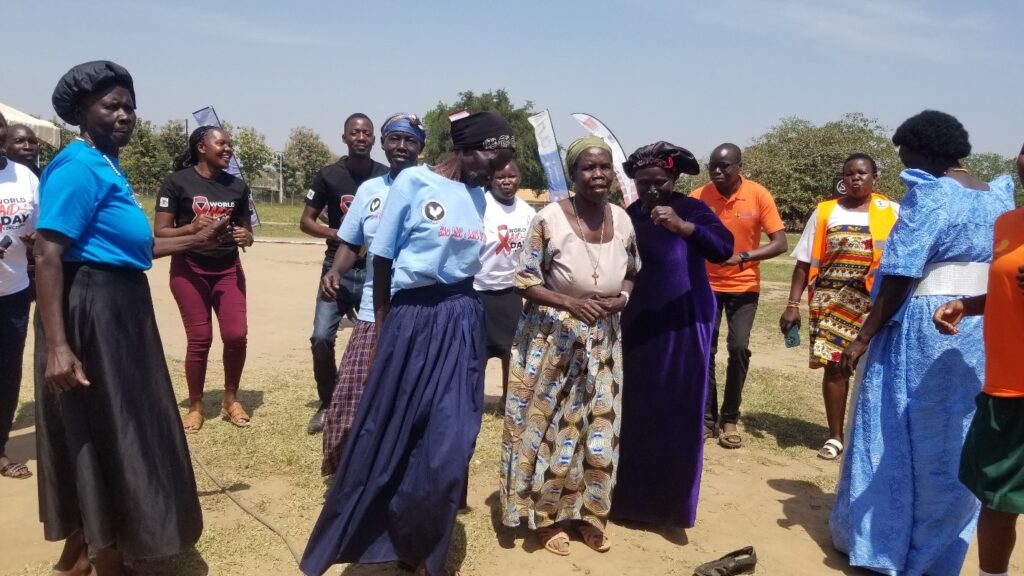
Sabina Vukoni, the Vice Chairperson of persons living with HIV/AIDS in Adjumani, said that non-adherence to treatment among the youth, drug abuse, and child marriage continue to fuel new infections.
“There are many issues that are leading to the rise… most of the youths don’t want to take this medicine daily as instructed,” she said.
Emuch David, TB/HIV officer with IDI, reported that “out of the district’s 3,300 individuals in care, about 2,700 are adhering well to treatment, translating to an 84% viral suppression rate. The district aims to reach the global target of 95% suppression as part of the 2030 HIV epidemic control goals. He emphasized that most treatment challenges are among children and adolescents, highlighting the need for more tailored interventions”.
Leaders also linked HIV infections to rising teenage pregnancies and the influence of social media. FAWE Uganda Head of Program, Joseph Adiama, noted that
“Platforms like TikTok have contributed to intimate relationships among adolescents, leading to both teenage pregnancy and increased HIV risk. I therefore want to appeal for stronger collaboration with political and community leaders in the fight against HIV and gender-based violence during the 16 Days of Activism,” Joseph said.
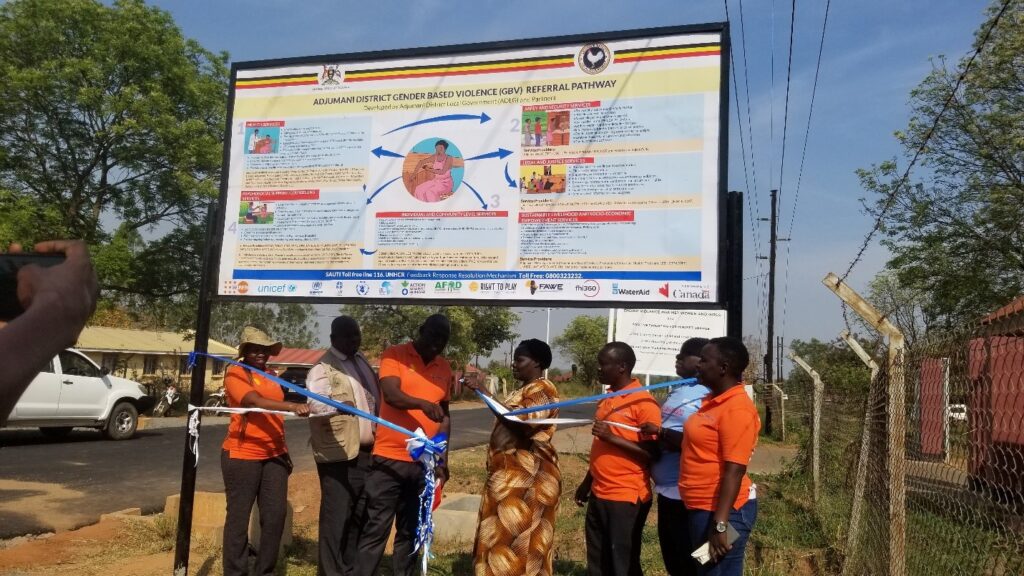
Mariko Otake, UNHCR Associate Protection Officer, reminded the public that HIV and gender-based violence are closely connected, noting that abuse and rape significantly contribute to HIV transmission. She also reaffirmed UNHCR’s commitment to awareness creation and prosecution of perpetrators of GBV.
Hon. Anyama Ben, the District Chairperson, expressed concern over the population influx in locations like Zoka C and Apaa, estimating that the areas host over 30,000 people, many of whom are untested.
“These people are marrying our daughters of Madi and us also marrying them. So, that could be one of the biggest challenges,” he said, calling for strengthened security and testing efforts.
The CAO Adjumani, Ochen Andrew James, emphasized the district’s commitment to achieving the 95-95-95 strategy, praising national leadership for progress.
“I would request that the war is still on and until we achieve 100%. That is the target. That’s when we’ll be celebrating that yes, we have made it. Although we are in the journey towards it,” CAO commended.
Meanwhile, the story of Komaa Christine, a teenage mother from Maaji III Refugee settlement, highlighted the importance of continued support for adolescent girls. After facing early pregnancy and abandonment, she received counselling and encouragement from FAWE, enabling her to return to school. Christine recently sat for her PLE and now awaits results to join secondary school in 2026, saying she is grateful for the support that helped her rebuild her future.
As Adjumani joins the rest of the world in commemorating World AIDS Day during the 16 Days of Activism, district leaders and health partners called on communities to prioritize prevention, testing, and treatment, and to address the social drivers that continue fuelling new infections. They reaffirmed their commitment to ensuring that by 2030, HIV becomes “history” in Adjumani and Uganda at large.
The celebration was supported by the different implementing partners in the district, Adjumani district local government, FAWE Uganda the lead partner, Media for All Uganda, Reach a Hand Uganda, OPM, UNHCR, IDI, Naguru teenage center, Medical Team International, Global Aim, Right to play, and Peace Hospice.
END.