
20 STUDENTS SET TO SIT UACE EXAMS AT ST. JAMES SS IN ADJUMANI.
By Onzima Allan
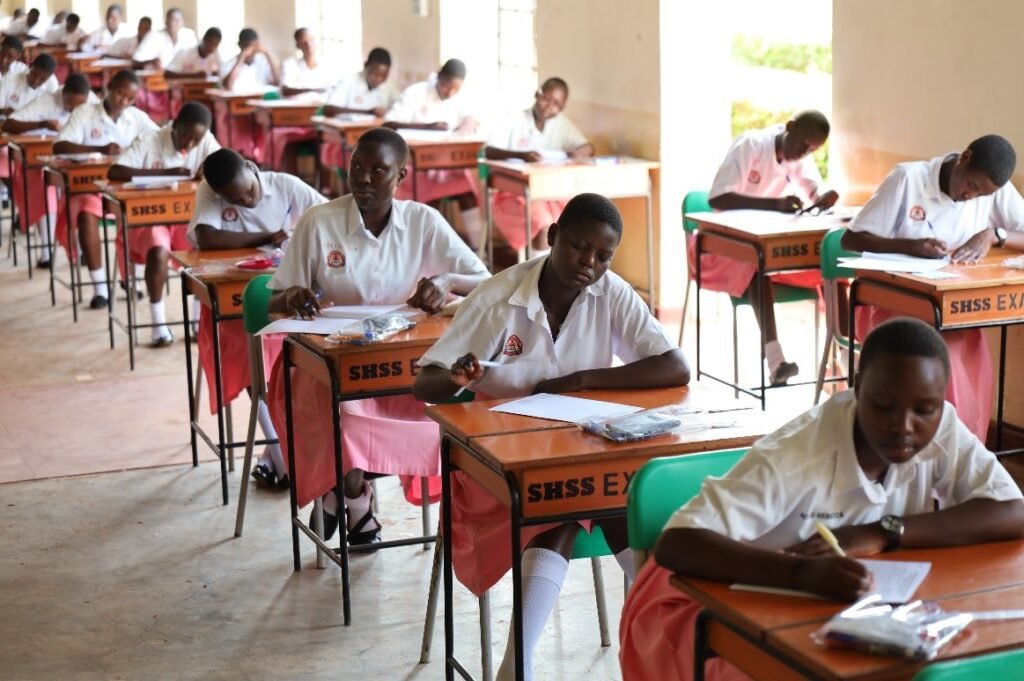
For the 20 students of St. James Secondary School in Dzaipi Sub-county, Adjumani District, the Uganda Advanced Certificate of Education (UACE) examinations represent more than a final test of what they have learnt over the years. They carry the hopes of families, the expectations of teachers and the possibility of opening doors to university and other opportunities.
As the 2026 UACE examination season begins, eight girls and 12 boys from the school are preparing to take on the examinations, with the majority drawn from science classes. Their preparations have been supported by teachers and school administrators, but the candidates now face the responsibility of translating years of classroom instruction into results.
The national examination briefing took place on November 6th, with written UACE papers scheduled to begin on November 9th and run until December 5th, 2026.
At St. James, Head Teacher Amale Savior said the examination process begins with the briefing of candidates and involves the contribution of several stakeholders to ensure that the exercise is conducted smoothly.
He urged candidates at St. James and other schools to play their part by remaining disciplined, confident and focused throughout the examination period.
One of the candidates, Kenyi Baptist Alau, expressed readiness for the examinations and encouraged fellow candidates to remain confident in their preparation.
For learners still in the lower classes, the moment also carries a sense of expectation. Eriyo Petrua, a student at the school, wished the candidates, particularly those in Senior Six, success, expressing hope that their efforts would produce positive results.
A growing examination cohort, greater responsibility
The 20 candidates at St. James are part of a much larger national cohort. According to the Uganda National Examinations Board (UNEB), 203,875 candidates registered for the 2026 UACE examinations, up from 166,400 in 2025, representing a 22.5 per cent increase. In Adjumani, 813 students are set to sit for the exams up from 132 in 2022.
The growing number of candidates reflects the increasing demand for advanced-level education and the importance of ensuring that learners are adequately prepared, supported and assessed fairly.
At school level, Deputy Head Teacher in charge of Academics, Emmanuel Odong, said teachers had done their part by equipping learners with the knowledge and skills required for the examinations. He urged candidates to apply what they had been taught rather than allow anxiety to undermine their preparation.
However, the responsibility of schools does not end when candidates leave the examination room. Odong also raised concerns about what happens to learners during school holidays, when some may be exposed to risks that affect their education, health and future.
He urged students to use the holiday productively by helping their parents, participating in community activities, reading and acquiring practical vocational skills.
He cautioned learners against idleness and negative peer influence, including drug abuse, theft and early sexual relationships. He also expressed concern about early pregnancies and HIV among school-going children in the district, calling on both girls and boys to make responsible decisions and protect their wellbeing.
The risks that follow learners home
Odong’s concerns reflect a wider national challenge. Teenage pregnancy and child marriage continue to threaten the education and future prospects of many adolescent girls in Uganda.
The Ministry of Health’s 2024/25 annual report on multi-sectoral efforts to end teenage pregnancy and child marriage estimates that approximately 1,000 teenage girls become pregnant every day in Uganda. The report also indicates that 34 per cent of girls marry before the age of 18.
The 2024 National Population and Housing Census further found that 6.5 per cent of girls aged 10 – 19 nationally had begun childbearing. The figure was also 6.5 per cent in the West Nile region, while the Madi sub-region recorded 3.8 per cent.
These figures provide important regional context, although they do not establish the prevalence of teenage pregnancy among students at St. James Secondary School or in Adjumani District specifically.
HIV also remains a concern among young people. Preliminary findings from Uganda’s 2025 Population-based HIV Impact Assessment, released by the Ministry of Health in October 2026, put HIV prevalence among young people aged 15 – 24 at 1.5 per cent, with prevalence higher among young women at 2.0 per cent compared with 1.0 per cent among young men. Among girls aged 15–19, prevalence was estimated at 1.3 per cent.
The statistics underline why learner protection cannot be treated as a responsibility that belongs to schools alone. They point to the need for sustained guidance, access to accurate health information and supportive environments in which young people can make informed decisions.
Parents and schools must remain involved
As candidates prepare to complete their final examinations and other learners head into the holiday, Odong called on parents and guardians to take an active role in guiding their children.
He urged families to monitor their children’s activities, offer counselling and maintain communication with them, rather than leave them without direction during the long break.
He also encouraged parents and guardians to ensure that learners return to school when the new term begins, warning that the holiday should not become an opportunity for children to disengage from education.
The call raises an important question for parents, schools and education stakeholders: how can the progress made in classrooms be protected when learners are outside the school environment?
For schools, this means making guidance and counselling a continuous part of learner support, including preparing students for the risks they may encounter during holidays. For parents, it means creating time to listen to, guide and supervise their children. Community leaders and relevant service providers also have a role in ensuring that young people can access appropriate information and support.
The examination period may determine the next academic step for the 20 candidates at St. James, but their long-term success will depend on more than the grades they obtain.
As they sit for their final examinations, their teachers hope to see the years of preparation reflected in their results. For the younger learners watching them, their journey offers a reminder of what education can make possible.
Yet, beyond the examination papers and eventual results, the bigger responsibility remains: ensuring that every learner has the support, protection and opportunity needed to complete their education and build a future.
END.