
MUNGULA HEALTH CENTRE IV GETS SHS 43 MILLION YOUTH-FRIENDLY SRHR CENTRE TO ADDRESS SERVICE GAPS.
By Allan Onzima
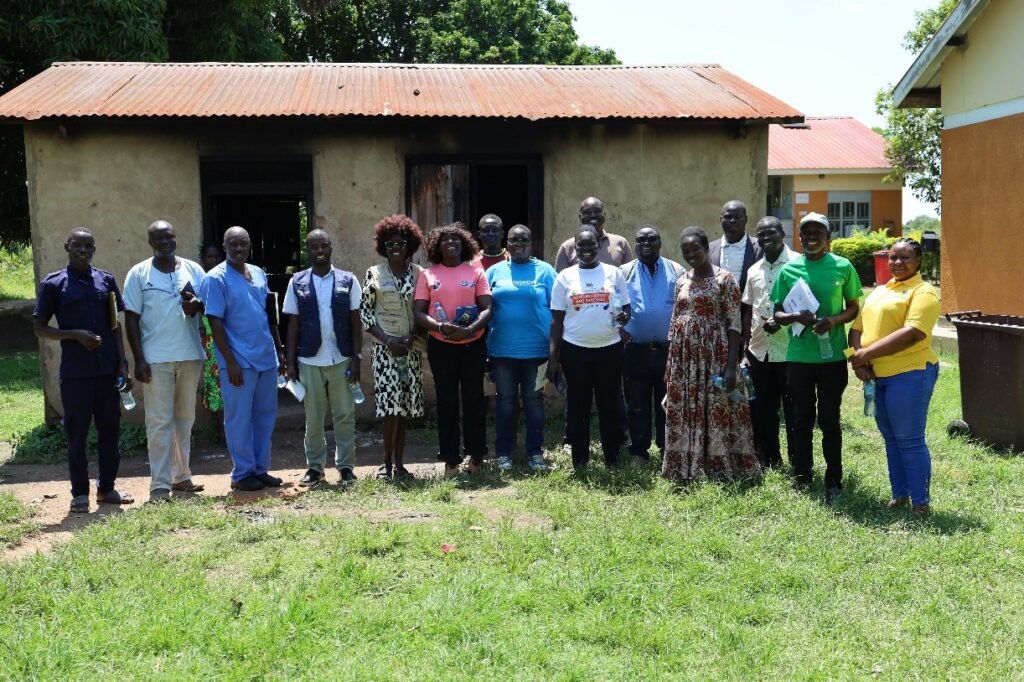
For many adolescents and young people in refugee-hosting communities, accessing sexual and reproductive health services can be complicated by limited facilities, inadequate privacy and the fear of being judged when seeking sensitive health information.
At Mungula Health Centre IV in Adjumani District, efforts are underway to address some of these barriers through the construction of a UGX 43 million Adolescent-Friendly One Stop Centre designed to give young people a safe, private and welcoming environment to access essential health services.
Train a Girl Child Uganda (TAGU), together with its partners, has handed over the construction site to a contractor, marking the beginning of a three-month project expected to strengthen access to adolescent-friendly Sexual and Reproductive Health and Rights (SRHR) services for young people in refugee and host communities.
The centre is being established under the Girls in Crisis – Deepening Impact (GiC-DI) project, with support from the Australian Department of Foreign Affairs and Trade and the Judith Neilson Foundation through the Australian NGO Cooperation Program.
Once completed, the facility is expected to provide adolescents and young people with access to SRHR information, counselling, referrals and related services in an environment that respects their privacy and dignity.
The intervention comes amid longstanding infrastructure challenges at Mungula Health Centre IV, which have affected the facility’s ability to provide some services in an appropriate environment.
Janet Mundua, Executive Director of TAGU, outlined the project’s objectives and reaffirmed the organisation’s commitment to ensuring that sexual and reproductive health services are accessible to adolescents and young people in both refugee and host communities.
She emphasised that access to SRHR services should not be limited by where young people live or their circumstances, noting that TAGU would continue working with partners to strengthen service delivery.
Dr. Atia Joseph Idoru, the In-Charge of Mungula Health Centre IV, welcomed the intervention, describing it as an important response to infrastructure challenges that the facility has experienced over the years.
He expressed optimism that the support from TAGU would help address the long-standing infrastructure gap and improve the environment in which adolescents and young people receive health services.
His remarks highlighted the importance of appropriate infrastructure in delivering quality healthcare, particularly services that require confidentiality and sensitivity.
Funding constraints heighten the need for partnerships
The intervention comes at a time when humanitarian operations are facing significant funding constraints, placing additional pressure on organisations and institutions supporting refugee and host communities.
Angua Christine, Assistant Field Officer for UNHCR in Adjumani, acknowledged the growing resource challenges, noting that humanitarian needs remain high even as available funding becomes increasingly limited.
She said the support provided through the initiative was particularly important at a time when resources are scarce and competing emergencies require attention.
Her remarks highlighted the growing importance of partnerships in sustaining essential services for vulnerable communities, especially adolescents who require consistent access to health information and support.
Twebaze Penelope, Assistant Settlement Commander for Mungula Refugee Settlement, commended TAGU and its partners for the initiative and pledged continued support from the Office of the Prime Minister (OPM).
She assured stakeholders that the settlement leadership would support the project from groundbreaking through construction to completion, including monitoring to ensure that the work meets the intended standards.
Beyond the construction: Will young people benefit?
The UGX 43 million investment represents an important step towards improving adolescent-friendly healthcare infrastructure in Mungula. However, the centre’s long-term impact will depend on more than the completion of the building.
Its effectiveness will also rely on the availability of qualified health workers, consistent supplies, appropriate referral systems and services that adolescents can access without fear of stigma or discrimination.
For young people, particularly girls, the availability of confidential counselling and reliable SRHR information can help them make informed decisions about their health and wellbeing.
The project is expected to be completed within three months, with stakeholders committing to continued collaboration and monitoring throughout implementation.
For Mungula Health Centre IV, the intervention offers an opportunity to address a longstanding infrastructure challenge. For adolescents and young people in the surrounding refugee and host communities, it presents the prospect of accessing essential health services in a space designed with their specific needs in mind.
Ultimately, the success of the initiative will be measured not simply by the completion of the UGX 43 million facility, but by whether young people feel safe, respected and confident enough to use the services it is intended to provide.
END.