
BEYOND THE CLASSROOM: MENSTRUAL HYGIENE SUPPORT REACHES GIRLS AT ALERE REFUGEE SETTLEMENT SCHOOL.
By Yiki Herbert.
For adolescent girls, managing menstruation should never come at the expense of their education, dignity or confidence. Yet, for many girls in underserved communities, including refugee settlements, access to menstrual hygiene products and appropriate support remains an important part of their everyday wellbeing.
At Alere Senior Secondary School in Alere Refugee Settlement, efforts to address this challenge received a boost following the distribution of hygiene pads by the United Nations Population Fund (UNFPA), the Royal Danish Embassy in Uganda and AFRIpads, in partnership with Adjumani District Local Government.
The intervention was part of a follow-up engagement under the Women Uganda 2025+ campaign, aimed at highlighting the sustained impact of Danish support towards strengthening adolescent and youth Sexual and Reproductive Health and Rights (SRHR) empowerment programmes.
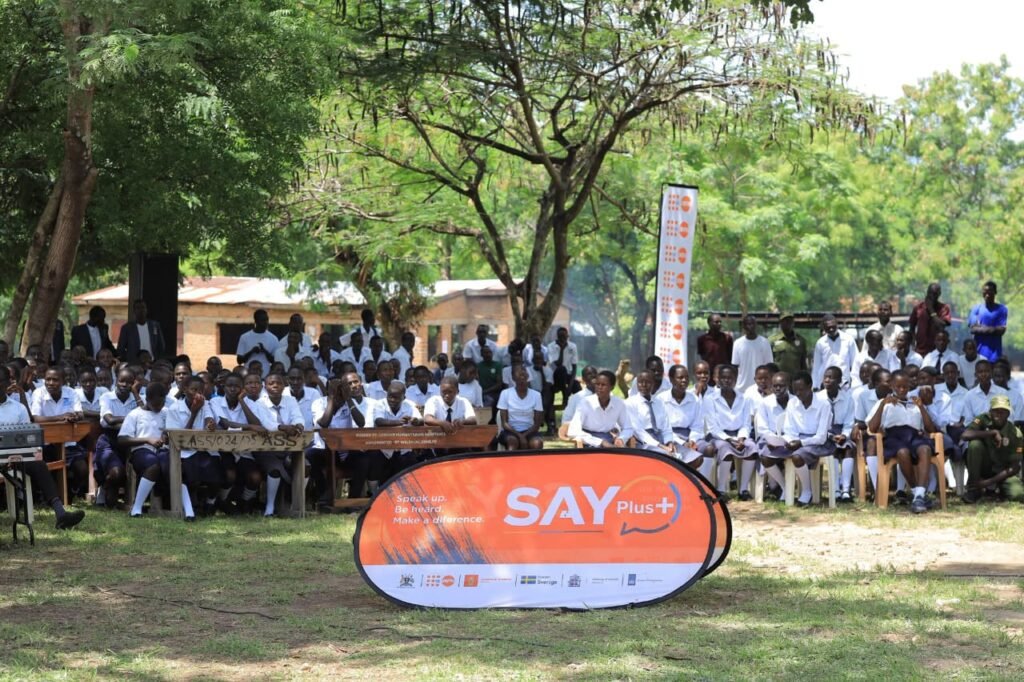
Beyond the distribution of hygiene products, the visit focused on promoting gender equality, empowering young people and preventing teenage pregnancies through sustainable Menstrual Hygiene Management (MHM) and male engagement.
For girls in refugee-hosting communities such as Adjumani, access to menstrual hygiene products is an important aspect of creating a supportive learning environment where menstruation does not become an additional barrier to their education and participation in school activities.
Dr. Jimmy Spire Ssentongo, Senior Lecturer in the Department of Philosophy at Makerere University and Male Champion, highlighted the components of the hygiene kits distributed to the learners, drawing attention to the importance of providing appropriate menstrual hygiene supplies.
Lulu Henry Leku, the Assistant District Health Officer in charge of Maternal Health, said Adjumani faces additional demands on its public services because of its refugee-hosting responsibilities.
He noted that refugees account for approximately a quarter of the district’s population, making support from development partners important in addressing the needs of both refugee and host communities.
He appreciated the partners for their continued contribution, noting that Adjumani would continue to require additional support to ensure that the burden of serving the population is shared.
“Adjumani appreciates the efforts of development partners and will continue to need more support to ensure the population burden is shared,” he said, adding that the intervention would help bridge gaps in resource allocation.
At the school, Head teacher, Achai Rosalina, welcomed the intervention, thanking the visiting partners and describing the gesture as a symbol of strength in promoting gender equality and girl-child empowerment.
Apio Sharon, Assistant Resident District Commissioner of Adjumani, said menstrual hygiene was a priority for the Office of the President, describing it as a matter of security.
Her remarks highlighted the wider implications of menstrual health, particularly the need to protect girls’ dignity, wellbeing and participation in education and community life.
Beyond distributing hygiene pads.
While the distribution provides immediate support to learners, the broader campaign also emphasizes sustainable menstrual hygiene management and male engagement.
This is important because menstrual health should not be treated as an issue affecting girls alone. Boys, parents, teachers, community leaders and institutions also have a role in creating environments where menstruation is understood, stigma is challenged and girls receive the support they need.
Engaging boys and men in menstrual hygiene awareness can help break cultural barriers, reduce discrimination and encourage shared responsibility in supporting adolescent girls.
The involvement of government and development partners also highlights the importance of sustained investment in adolescent health and sexual and reproductive health education, particularly in communities facing additional social and economic pressures.
For the learners at Alere Senior Secondary School, the hygiene pad distribution is a welcome intervention. However, lasting change will depend on more than occasional donations. It requires consistent access to menstrual hygiene products, appropriate sanitation facilities, accurate information and supportive school environments.
As efforts to advance adolescent health and gender equality continue in Adjumani, the bigger question is how such interventions can be sustained and extended to reach more girls across refugee settlements and host communities.
Ultimately, no girl should have to choose between managing her period and pursuing her education. Ensuring that girls can attend school with dignity and confidence is not simply a menstrual health intervention; it is an investment in their education, equality and future.
END.