
BEYOND TREE PLANTING: CAN ADJUMANI’S CLIMATE-SAVVY SCHOOLS CHANGE HOW COMMUNITIES ADAPT TO CLIMATE CHANGE?
With Adjumani experiencing a prolonged dry spell and the prospect of heavy rains and flooding ahead, a new project aims to equip children, schools and vulnerable households with practical tools for climate resilience. Its impact will depend on whether the interventions reach communities, reduce pressure on forests and survive beyond donor support.
By Bazio Doreen.
For schools that rely on firewood to prepare meals, climate change is not just a lesson in a classroom. It is also a question of how food is cooked, how natural resources are used and whether communities can withstand increasingly difficult weather conditions.
In Adjumani, where communities have recently experienced approximately three months of dry weather and are anticipating heavy rains, the consequences of changing weather patterns are becoming harder to ignore.
A new initiative hopes to turn that growing awareness into practical action.
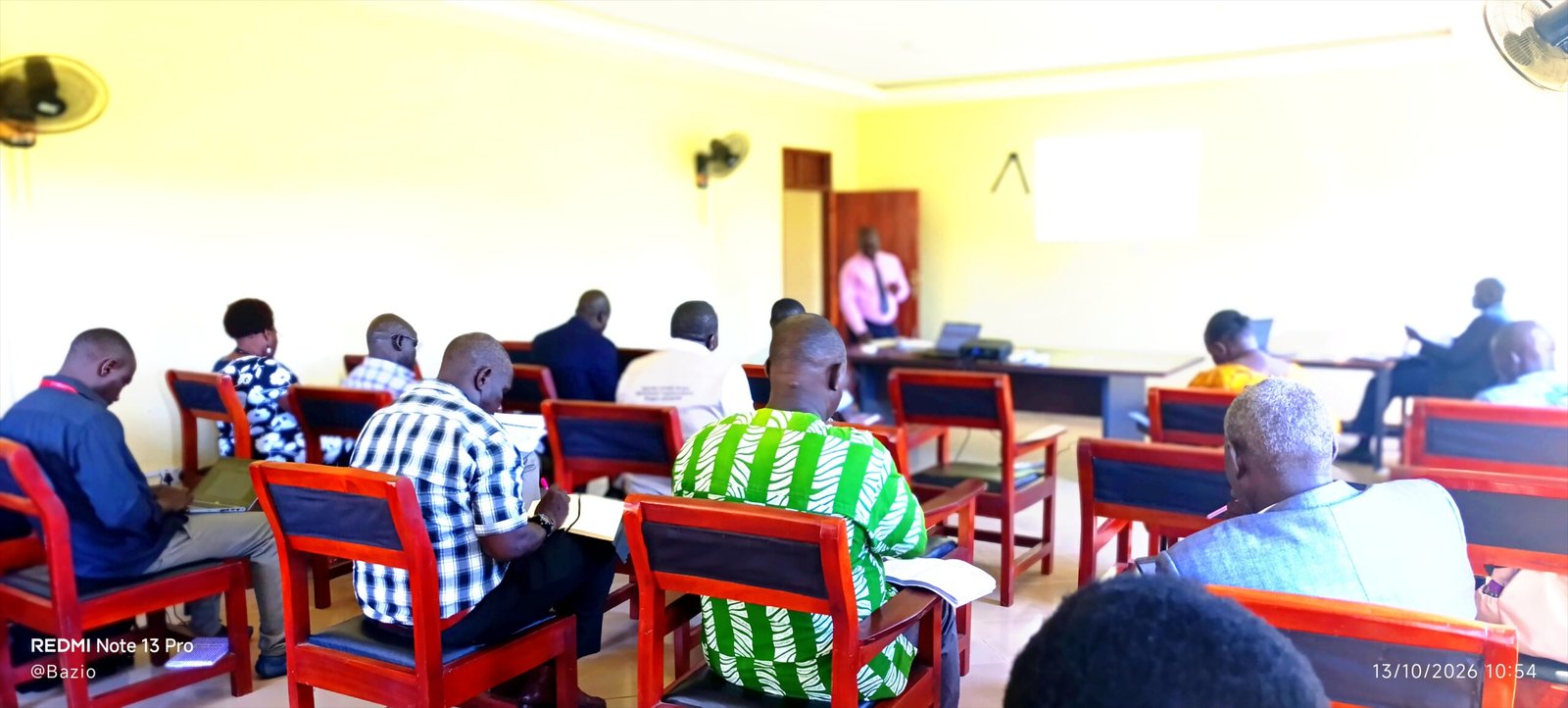
The Climate-Savvy Children in Uganda project, introduced during an inception meeting on October 13th, 2026, aims to strengthen the resilience of children, schools and surrounding communities in Adjumani and Lamwo districts.
Implemented under the Uganda Refugee Resilience Initiative (URRI) by a consortium led by Save the Children International, with support from Haldor Topsoe, the project will promote climate literacy, energy conservation, ecosystem restoration and tree planting.
But as the project moves towards implementation, important questions remain: Will schools receive technologies that meaningfully reduce their firewood consumption? Will communities around the selected schools benefit? And what arrangements will ensure that the trees, cooking stoves and climate clubs remain functional after the project ends?
From climate awareness to practical solutions
The project, valued at UGX 247,232,380 and scheduled to run until July 2027, targets 10 schools, 10,000 children, 1,000 vulnerable households and 40 artisans across Adjumani and Lamwo.
Planned activities include: establishing 10 functional climate clubs, installing 10 institutional cooking stoves and planting 500 seedlings across four nursery sites.
According to Aciro Kevin, Programme Manager at Save the Children, the project aims to reduce firewood consumption by between 40 and 60 per cent.
The proposed interventions address several connected issues: children’s understanding of climate change, the use of firewood for institutional cooking, the loss of vegetation and the capacity of communities to adapt to environmental pressures.
“We can’t run away from harsh weather and therefore people need to adopt resilience initiatives and adapt to climate change,” Aciro said during the inception meeting held at the District Natural Resources Department Boardroom.
Her remarks reflect the project’s emphasis on adaptation rather than simply raising awareness about climate change.
For schools, more efficient institutional cooking stoves could reduce the amount of firewood needed to prepare meals. Climate clubs could give children opportunities to learn about environmental conservation, while tree planting could contribute to restoration efforts if seedlings survive and are properly maintained.
However, these benefits will depend on implementation. The project has set a firewood-reduction target, but the baseline, measurement method and arrangements for independently verifying the reduction will be important in assessing whether the target is achieved.
Who gets selected—and who gets left out?
The inception meeting also highlighted the importance of selecting beneficiaries who can make effective use of the interventions.
Allan Sebutinde, Save the Children’s Monitoring, Evaluation, Accountability and Learning Coordinator, said criteria had been established for selecting schools, households and artisans.
He asked the district education department to submit a list of 20 schools for assessment, from which five schools in Adjumani would be selected.
“I request the District Education Department to submit a list of 20 schools for assessment, from which five schools will be selected,” Ssebutinde said.
The remaining five schools will be selected in Lamwo to meet the overall project target of 10 schools.
Among the proposed requirements, schools should have a feeding programme and be in a favorable condition to support successful implementation.
The selection process presents an opportunity to ensure that resources reach institutions where the interventions can be sustained. However, it also raises a social-accountability question: how will the project balance readiness to implement with the needs of schools and communities that are especially vulnerable to climate change?
A school with better facilities may find it easier to maintain a new cooking stove or organize a climate club. Yet a school facing greater resource constraints may have an equally pressing need for support.
The project partners and district authorities should therefore communicate the selection criteria clearly, document the reasons for choosing beneficiaries and provide a transparent process for addressing concerns from schools that are not selected.
The criteria should also be applied consistently across refugee-hosting and host communities.
Communities should not be spectators.
The District Vice Chairperson, Hon. Obulejo Geoffrey, urged project implementers to extend the benefits to communities surrounding the selected schools.
“I am a tree grower and I also know the benefits of trees. We have unreliable rainfall and our people are starving. We need our farmers to also embrace afforestation,” Hon. Obulejo said.
He also observed that the initiative could reduce dependence on forest products by encouraging alternative sources of wood fuel and more sustainable energy practices.
His concern is significant because environmental pressures do not stop at school boundaries. Where schools adopt more efficient cooking methods but neighboring households continue to depend heavily on firewood, the wider environmental benefits may remain limited.
Including surrounding communities could help extend climate literacy beyond classrooms and encourage the adoption of practical conservation measures at household level.
The targeting of 1,000 vulnerable households and 40 artisans offers a further opportunity to connect environmental education with household resilience and local skills.
The project partners will need to explain how these beneficiaries will be identified, what support they will receive and how participation will be distributed between refugee and host communities.
For artisans, clear information about the training or support available would also help establish whether the project is building skills that can be used beyond its implementation period.
Fruit trees, survival rates and the cost of sustainability.
The Resident District Commissioner, Toko Swaib, welcomed the initiative and encouraged the project team to prioritize fruit trees.
He also called for authorities in selected schools to receive orientation on the project and advised against selecting schools already implementing similar projects or those that had previously benefited from comparable interventions.
“The PTAs, and SMCs, need to understand what this project is about before they commit to ease implementation. This will also help us achieve sustainability when the project ends,” Toko said.
The recommendations highlight two considerations: avoiding duplication of support and ensuring that schools take responsibility for the investments they receive.
But planting seedlings is only the beginning of successful tree restoration.
The project plans to distribute 500 seedlings across four nursery sites. Its environmental impact will ultimately depend on how many seedlings survive, whether suitable species are selected for local conditions, and whether schools and communities have the water, tools and arrangements needed to maintain them.
Fruit trees could provide environmental benefits while potentially contributing to food availability over time. Their success, however, will depend on species selection, growing conditions and long-term maintenance.
A transparent monitoring system should therefore track not only the number of seedlings planted but also their survival rates at regular intervals.
The project should also clarify who will be responsible for replacing seedlings that fail, protecting trees from damage and maintaining the sites after donor-funded activities end.
Climate resilience as heavy rains approach
Adjumani’s recent dry spell has heightened local awareness of weather-related challenges. The prospect of heavy rains and potential flooding adds urgency to efforts to strengthen climate preparedness.
The district’s experience also illustrates why resilience initiatives need to extend beyond individual activities such as planting trees or introducing energy-efficient stoves.
Climate literacy should help children understand local environmental risks and the actions they can take. Schools can also contribute by integrating practical climate actions into their improvement plans and engaging parents and surrounding communities.
The project intends to support this continuity through maintenance committees, involvement of School Management Committees and Parent-Teacher Associations, and integration of climate actions into school improvement plans.
These arrangements could help ensure that the initiative remains part of everyday school management rather than a temporary project activity.
However, committees and plans will only be effective if responsibilities are clearly assigned, resources are available and progress is monitored.
The accountability test begins after the launch
The project offers an opportunity to test whether climate education can translate into practical, measurable improvements in refugee-hosting and host communities.
The inception meeting established the project’s intended beneficiaries and activities. The next step is to make progress visible and verifiable.
Save the Children and its partners should provide clear information about beneficiary selection, the installation and use of institutional stoves, the functioning of climate clubs, and the distribution of seedlings across nursery sites.
They should also establish how the targeted reduction in firewood consumption will be measured and report whether the expected savings are achieved.
For tree planting, survival rates will offer a more meaningful indicator of progress than the number of seedlings distributed. For climate clubs, evidence of regular activity and practical initiatives will be more informative than membership figures alone.
District leaders and school authorities also have a role to play in monitoring implementation, addressing community concerns and ensuring that schools understand their responsibilities.
The project should create accessible channels through which children, parents, teachers and surrounding residents can ask questions, report challenges and contribute to decisions affecting them.
Ultimately, the success of the Climate-Savvy Children project will not be measured solely by the number of schools selected or trees planted.
It will depend on whether children gain practical climate knowledge, schools reduce their dependence on firewood, seedlings survive, vulnerable households benefit and the systems introduced continue functioning after July 2027.
For Adjumani, where communities are already confronting difficult weather conditions, the real promise of climate resilience lies in turning a project launch into lasting changes in how people protect their environment and prepare for the future.
END.