
VACCINATED BEYOND THE TARGET, YET STILL AT RISK: ADJUMANI’S MEASLES CHALLENGE.
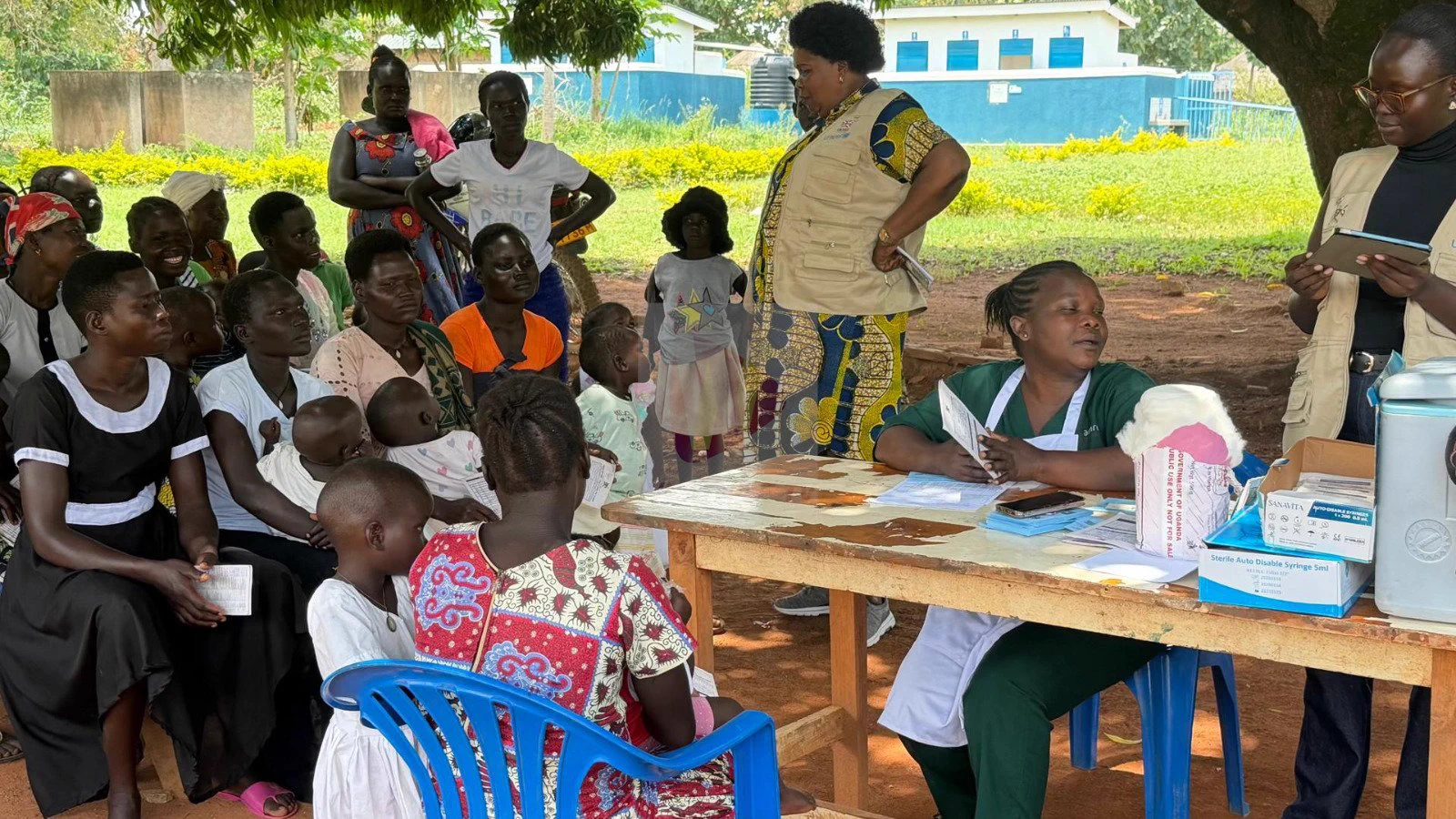
Adjumani reported 197 per cent coverage during Uganda’s October 2026 measles-rubella campaign. But while vaccination figures exceeded expectations, low-performing sub-counties and limited access to health services in Apaa raise questions about whether every child is being reached—and who is accountable for closing the gaps.
By Bazio Doreen.
For a mother in Apaa, protecting her child from measles may depend on more than the decision to seek vaccination. It may depend on whether a public health facility is accessible, whether outreach teams reach her community and whether her child can return for subsequent doses.
In an area where access to public healthcare has been severely disrupted, these are not merely questions of parental responsibility. They are questions about the availability of essential services and the government’s obligation to make them accessible.
The concerns are particularly significant in Adjumani District, which reported vaccinating 61,652 children during the October 1st – 5th, 2026 measles-rubella campaign against a target of 31,200.
The reported coverage of 197 per cent placed Adjumani second nationally, above West Nile’s 129.1 per cent and the national average of 110.9 per cent.
Yet beneath the impressive headline figure are communities that fell short of the 95 per cent campaign target, questions about the accuracy of population estimates and a continuing need to reach children who miss routine immunization.
For a district hosting refugees and communities with limited access to health services, the central question is not simply how many children were vaccinated during five days. It is whether every eligible child can access protection when they need it.
The paradox behind Adjumani’s 197 per cent
According to the district campaign figures, Adjumani vaccinated 30,452 more children than its target of 31,200.
District-level explanations for the unusually high coverage include: mobile refugee populations, outdated population estimates from the Uganda Bureau of Statistics, children coming from neighboring districts and mop-up vaccination data that have not been fully reconciled.
These factors may help explain why the number vaccinated exceeded the planned target. However, their individual contribution has not been established by the figures available.
The discrepancy deserves scrutiny because vaccination coverage is calculated against an estimated target population. If that estimate is outdated or does not accurately reflect population movements, the resulting percentage may not provide a reliable picture of how many eligible children living in the district were reached.
The district health team therefore needs to reconcile vaccination registers, geographical records and mop-up data, including vaccinations administered to children from neighboring districts.
Such verification would help establish how many unique eligible children were vaccinated, where the children came from and which communities still have children who missed the campaign.
This is not about dismissing the work of vaccination teams. It is about ensuring that the figures used to assess performance also help health authorities identify and protect children who remain vulnerable.
Uganda’s measles history shows why the numbers matter.
Adjumani’s campaign took place against a concerning national background.
A study by the Uganda National Institute of Public Health found that Uganda reported 3,192 measles cases between 2020 and 2025. Cases increased from 48 in 2021 to 1,967 in 2025. During that six-year period, 115 of Uganda’s 146 districts experienced at least one confirmed measles outbreak.
The study also found that 46 districts reported outbreaks in 2025 alone.
The findings point to a persistent public health challenge despite the availability of an effective vaccine. They also show why campaign coverage must be considered alongside routine immunization, outbreak surveillance and access to healthcare.
The World Health Organization reported ahead of the October 2026 campaign that Uganda had experienced 66 separate measles outbreaks in 2025. It also noted that many affected children had never received a first dose of the vaccine.
The distinction is important. Children who have never been vaccinated require a different follow-up approach from those who have started but not completed the recommended schedule.
For district health authorities, the responsibility extends beyond administering vaccines during a campaign. It includes identifying missed children, maintaining reliable records and ensuring that communities can access routine immunization services.
First doses, missed follow-ups and the risk of being left behind.
Routine immunization figures offer another warning.
The World Health Organization (WHO) and UNICEF estimates for 2025 placed Uganda’s measles-containing vaccine coverage at 92 per cent for the first dose and 66 per cent for the second dose.
That gap raises questions about whether children who enter the vaccination system are being followed up until they receive all recommended doses.
The Uganda National Institute of Public Health study found that, among the 3,192 measles cases reported between 2020 and 2025; 2,970 cases—93 per cent—were recorded among people who had received one measles-rubella dose. None of the reported cases had received the full two-dose schedule.
These findings should not be interpreted as proof that one vaccine dose caused infection or that every child who received one dose remains unprotected. They do, however, reinforce the importance of completing the recommended vaccination schedule and investigating the circumstances surrounding infections.
For families, the practical questions are straightforward: Are vaccination services available nearby? Do caregivers know when to return? Are missed appointments followed up? And can health workers identify children whose vaccination records are incomplete?
The answers depend on functioning health systems, reliable records and sustained engagement with communities—not mass campaigns alone.
Apaa: when access to healthcare becomes a public accountability issue.
The challenges in Apaa bring these questions into sharper focus.
Lulu Henry Leku, Adjumani’s Assistant District Health Officer In Charge of Maternal and Child Health, estimates that 65 per cent of children in the Apaa area hosting about 100,000 residents had received no vaccination doses before the October campaign. He linked the gap to the lack of accessible health facilities and reported that the nearest public health unit, Mungula Health Centre III, was approximately 30–40 kilometers away.
Lulu also described the difficulties faced by sick children and pregnant women who must travel long distances to obtain care.
These circumstances raise a question that cannot be answered by campaign coverage figures alone: how can families be expected to maintain routine immunization when the services they need are difficult to reach?
Measles cases were recorded in Apaa between January and March 2026. The local health-service gaps described in the report offer important context for understanding the area’s vulnerability, although the circumstances of individual cases and their vaccination histories require verification.
The issue also extends beyond the health department. Where administrative, land-management or infrastructure constraints prevent the establishment of permanent services, government institutions need to explain what alternative arrangements are available to ensure that residents are not excluded from essential healthcare.
Mobile clinics, regular outreach sessions, accessible vaccination points and coordinated cross-district services are among the options that could be assessed. The appropriate response would require clear responsibilities, adequate resources and a timetable for implementation.
Without such measures, residents may continue to bear the consequences of barriers they cannot resolve themselves.
A district-wide success that hides local gaps.
Adjumani’s overall performance also masks significant differences between lower local governments.
According to the district campaign results, Itirikwa recorded 110 per cent coverage, Adropi 108 per cent, Arinyapi 106 per cent, Ciforo recorded 99 per cent, Ukusijoni 97 per cent, Pachara 95 per cent and Adjumani Town Council 104 per cent.
However, Ofua recorded 74 per cent, Dzaipi 76 per cent, Pakele Town Council 80 per cent and Pakele Sub-county 85 per cent.
These four areas fell below the national target, despite the district’s reported coverage of 197 per cent.
The figures should prompt district leaders to examine the reasons behind the differences rather than relying solely on the overall district result.
Several of the lower-performing areas are refugee-hosting communities. Population mobility may complicate planning and follow-up, but it should not automatically be treated as the explanation for every missed child. Local investigations are needed to establish whether the gaps reflect access barriers, missed outreach, inaccurate targets, incomplete reporting or other factors.
The district health team should publish or communicate the findings of this review and explain what corrective action will be taken in each underperforming area.
For residents, this information matters because it connects a campaign’s reported results to the services they can expect to receive in their own communities.
Who is accountable for reaching the children still missing?
The October campaign provides an opportunity to ask practical questions about public service delivery.
The district health team needs to reconcile the reported coverage figures, identify children who missed vaccination and explain how the low-performing areas will be supported.
Sub-county leaders and health workers need to establish why coverage was low in Ofua, Dzaipi and Pakele, while supporting follow-up visits and community mobilization where required.
The Ministry of Health and immunization programme need to clarify the final campaign totals, support routine immunization and ensure that national monitoring captures both children receiving their first dose and those who have not completed the recommended schedule.
Responsible government institutions also need to address the healthcare access barriers affecting Apaa. If permanent facilities cannot be established immediately, residents need to know what alternative services will be provided, by whom and how regularly.
These are not merely administrative details. They determine whether families can access essential services and whether public resources are producing the intended results.
A useful accountability process would include verified campaign data, a breakdown of performance by lower local government, a list of priority communities for follow-up and a clear plan for tracking children who missed vaccination.
It should also give residents an opportunity to report missed outreach visits, inaccessible services and children who remain unvaccinated.
Beyond the campaign: measuring what matters.
Adjumani’s reported 197 per cent coverage is a significant campaign result, but the percentage alone cannot establish whether every eligible child has been reached.
The district needs to reconcile its vaccination data, improve population estimates and coordinate records across neighboring districts. It also needs to prioritize the communities that fell below target and strengthen access to routine immunization, especially in areas such as Apaa.
The next phase should be judged by more than the number of vaccines administered. Relevant measures include the number of previously unvaccinated children reached, the number of children who missed scheduled doses and were subsequently followed up, and whether routine services are accessible to families throughout the year.
District health officials should also communicate the findings of the data review and report progress in the underperforming communities.
For parents in Apaa and other underserved areas, protection cannot depend on whether a vaccination campaign happens to reach their village during a particular week.
It depends on a health system that can find children who have been missed, provide services within reasonable reach and account publicly for gaps that remain.
Adjumani has reported vaccination beyond its target. The next test is whether it can turn that achievement into sustained, verifiable protection for every eligible child.
END.