
WHO IS RESPONSIBLE? WE-CAN TARGETS TOBACCO FIRM, REGULATORS OVER AJIA POLLUTION CLAIMS.
By Dramadri Federick
The West Nile Compensation Advocacy Network (WE-CAN) has threatened legal action against Meridian Tobacco Company Limited, the National Environment Management Authority (NEMA), and Arua District Local Government over alleged environmental pollution linked to the company’s operations in Ajia Sub-county, Arua District.
The planned lawsuit follows two unanswered petitions submitted by the advocacy group raised concerns about environmental compliance, public health risks, and what the organization describes as continued silence from both the company and regulators.
In its initial petition dated March 23, 2026, addressed to the Managing Director of Meridian Tobacco Company, WE-CAN demanded the release of Environmental and Social Impact Assessment (ESIA) audit reports, as well as evidence of compliance with environmental and constitutional obligations. The organization issued a seven-day deadline, but says no response was received.
A second petition, dated April 13, 2026, was addressed to the Executive Director of NEMA and copied to Arua District Local Government and other relevant authorities, including the tobacco company itself. In this communication, WE-CAN issued a 14-day ultimatum to both the company and the regulator to provide proof of compliance with environmental and public health protection laws.The deadline expired on April 29, 2026, without any formal response.
According to WE-CAN, the lack of engagement has left residents living near the factory increasingly concerned about their health and safety. Communities within a five-kilometer radius have reportedly complained of a persistent tobacco odor, which they believe could pose serious health risks.
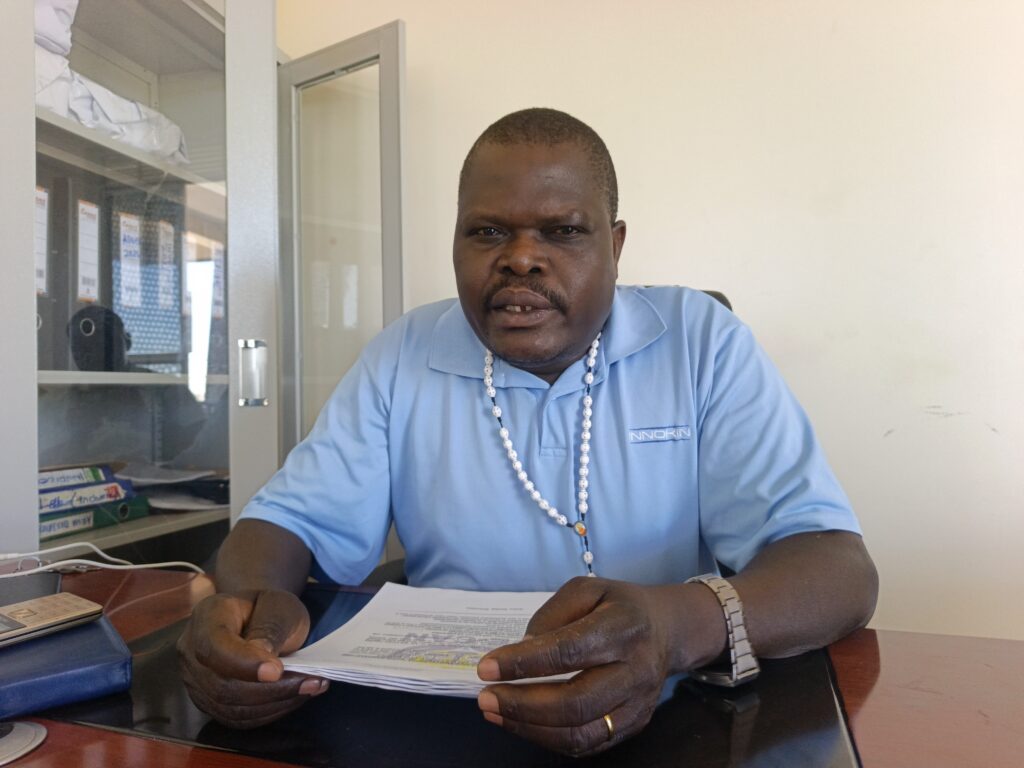
Richard Andama, the Managing Director of WE-CAN, says the organization has made repeated attempts to engage both the company and the authorities but has been met with silence, prompting the decision to pursue legal action.
“We have been engaging them on issues of discharge and pollution specifically the environmental issues, aware the community has been bitterly complaining of the toxic smell and you remember a child drawn in the unprotected sewerage facility and died. At first we wrote to the Managing Director of Meridian Tobacco Company Limited, they never responded, we went ahead to NEMA we didn’t receive any response and we are not stopping there,” Andama stated.
He adds that WE-CAN has now instructed its lawyers to issue a formal notice of intention to sue all three entities, citing their respective roles in the matter.
Victor Ajuma, the Technical Director of WE-CAN, also emphasized that legal action is now inevitable, arguing that responsibility must be assigned to all parties involved. He says Meridian Tobacco Company should be held liable as the alleged polluter, while NEMA should be held accountable for its regulatory mandate. He further faults Arua District Local Government for permitting the establishment of the factory in a densely populated area.
“The next thing is to drug these entities to court because we cannot allow our people to die like that. The first party is Meridian Tobacco Company Limited who is the polluter and who will be put to strict liability, to compensate any damage to environment, ecosystem and human health, the second party is NEMA who is the regulator and the third party is Arua district local government who permitted the company to establish tobacco factory amid heavy population,” Ajuma said.
Beyond the immediate dispute, the situation in Ajia reflects broader national concerns about the health and environmental impact of tobacco production and exposure. Data from NEMA indicates that tobacco use and air pollution contribute to more than 30,000 deaths annually in Uganda, translating to an estimated 204 deaths each week figures that surpass the combined deaths from HIV, malaria, and tuberculosis.
Tobacco is also a major contributor to non-communicable diseases (NCDs), which account for approximately 25 percent of all deaths in the country, with an estimated economic burden of 126 million US dollars annually.
At the local level, concerns have also been raised about enforcement and follow-up by district authorities. In March, the Arua District Chief Administrative Officer, Wamburu Soita Emmanuel, pledged to dispatch a team of technical officers to investigate the allegations. However, no findings from that exercise have been made public.
Efforts to obtain official responses from both NEMA and Meridian Tobacco Company Limited have so far been unsuccessful, with calls to their known contacts reportedly going unanswered.
Meanwhile, Uganda’s broader regulatory environment is also under scrutiny. The 2025 Global Tobacco Industry Interference Index ranks the country 10th out of 100 countries, with a score of 41, indicating increased tobacco industry influence on public health policy. This marks a decline from Uganda’s 7th position in 2023 and highlights ongoing concerns about transparency and oversight in industry-government interactions.
For WE-CAN and affected residents, the next step now appears to lie in the courts, as pressure mounts on both corporate and public institutions to account for their actions and address the environmental and public health concerns raised by the community.
END.