
By Onzima Allan
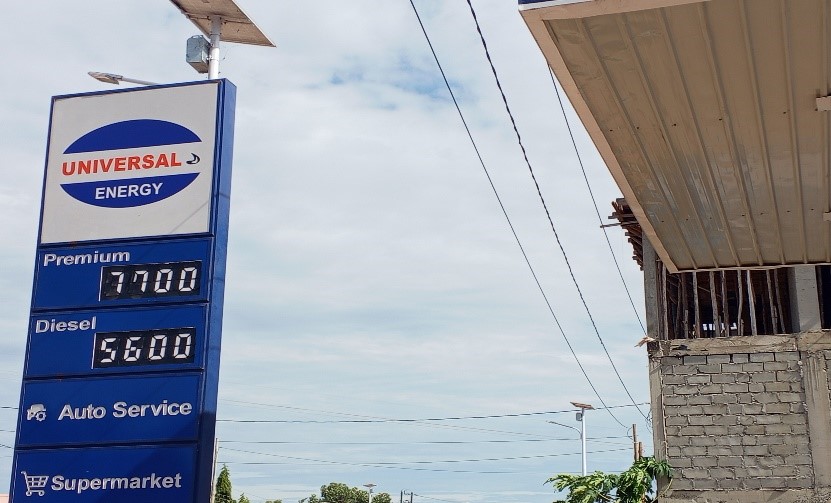
Fuel price fluctuations have sparked concern among drivers and boda boda operators in Adjumani District, as rising global oil prices—largely driven by geopolitical tensions—continue to push transportation costs higher, affecting businesses and commuters alike.
Across Uganda, petrol prices currently average between UGX 5,200 and UGX 5,400 per litre in major urban centres such as Kampala, while diesel ranges between UGX 5,000 and UGX 5,150. However, the situation in Adjumani appears significantly worse, with some reports indicating petrol prices as high as UGX 8,000 per litre—well above the national range.
According to Iceta Denis, a driver in Adjumani District, fuel prices in the area have surpassed those in other parts of the country.
“The fuel price fluctuation in the district has surpassed prices in other parts of the country, with the current price of petrol at shs 8,000 per litre,” he stated.
While part of the increase is attributed to transport and supply chain costs, the scale of the disparity has raised questions about possible market distortions and weak regulatory enforcement.
Policy, Regulation, and Market Structure.
Uganda’s fuel pricing operates under a liberalized system overseen by the Ministry of Energy and Mineral Development, where pump prices are determined by oil marketing companies. The Uganda National Oil Company plays a role in bulk procurement and strategic reserves, but has limited direct control over retail pricing.
Officials have consistently attributed regional price differences to logistics and global oil trends. However, experts argue that liberalization without strong enforcement mechanisms creates gaps that can be exploited, especially in remote districts.
Fuel Cartels and Price Manipulation Concerns.
Industry observers and transport operators point to the possibility of informal fuel cartels, where a small number of suppliers dominate local markets and influence pricing. In districts like Adjumani—far from central supply hubs—limited competition can allow traders to set disproportionately high prices.
There are also concerns about speculative pricing, where dealers raise prices in anticipation of shortages or global increases, even when existing stock was purchased at lower rates. This creates artificial price spikes that are not always justified by supply costs. Transport operators say the rising costs are already being passed on to passengers.
Vuni Charles, Vice Chairperson of the Gulu Stage Drivers Association, confirmed that transport fares have been adjusted in response to inflationary pressures.
“Due to the current inflation, transport charges have been slightly adjusted,” he said, appealing to commuters to comply with the new fares.
Enforcement Gaps and Accountability Issues.
Despite the Ministry’s oversight role, monitoring of fuel prices at district level remains inconsistent, with limited real-time enforcement. This makes it difficult to detect overpricing, hoarding, or coordinated price setting.
Agencies such as the Inspectorate of Government have previously highlighted risks of corruption in sectors with weak regulatory control, including procurement and supply chains. While no specific wrongdoing has been confirmed in Adjumani, analysts warn that lack of transparency in fuel distribution and pricing leaves room for abuse.
The impact is also being felt in the financial sector. Maku Patrick, General Manager of Adjumani Town Council SACCO, acknowledged the strain on the transport industry but cautioned against using the crisis as a reason for loan default.
“The fuel price crisis has indeed affected the transport sector, but it shouldn’t be an excuse for loan applicants to default on their payments,” he emphasized.
Meanwhile, fuel dealers in the district present a mixed picture.
Aniku Vicky, Station Manager at Rock Fuel Station, maintained: “We are still selling fuel at shs 5,600 per litre amidst the ongoing price fluctuation.”
Growing Calls for Reform.
The situation in Adjumani has intensified calls for stronger government intervention, including: enhanced price monitoring mechanisms at district level; greater transparency in fuel supply chains; consideration of price stabilization measures during extreme volatility; and strengthening the role of UNOC in influencing downstream pricing.
Without such measures, experts warn that disparities between urban and rural areas will persist, disproportionately affecting already vulnerable communities.
A Widening Inequality.
Despite Uganda maintaining relatively stable national averages compared to global markets, the sharp contrast seen in Adjumani highlights deeper structural and governance challenges. For many residents, the issue is no longer just global oil prices—but whether the system meant to regulate them is working fairly.
As fuel remains central to transportation, trade, and daily livelihoods, the need for accountability, transparency, and effective oversight is becoming increasingly urgent.
END.